
Recent Posts
So What's The Weather
My husband and I aren’t just from the Northern Hemisphere — we’re from the far Northern Hemisphere, deep in the North Woods of Maine. Winter there isn’t just cold; it’s very cold. Still, as an avid walker, I head out every morning bundled like a cheerful arctic explorer. In early March I’m wearing two pairs of socks, two pairs of pants, a T-shirt, a shirt, a sweater, a jacket, two pairs of gloves, two pairs of mittens, my mom’s scarf (long enough to wrap around my neck, head, and mouth), and two warm hats. And off I go for my two mile sunrise walk — perfectly comfortable. Rugged, right?
But even in Northern Maine, the air has moisture. When an arctic blast rolls through and the temperature drops to –10°F, the air turns sharp and dry, and every step feels like walking inside a deep freezer. But on a normal cold day? –10°F is practically nothing.
Here in Limpopo, though, the air is always dry — and that changes everything.
Daisy and I head out around 6:30 each morning. The sky is pale and cloudless, the kind of washed‑out blue that only appears before the sun has fully claimed the day. The temperature hovers around 45°F, but the dryness makes it feel like the cold is reaching straight through your clothes and settling into your bones.
And then there’s the bush itself — quiet, but never silent.
As we walk, the air smells faintly of dust and there is sometype of smell on a certain shrub that Daisy checks out every morning. A few flocks of guinea fowl strut on the dirts paths, I think catching the last of the previous days heat. We are able to get pretty close to them. Maybe even 15 yards away. In the morning they never fly away from us. The just run first in all different directions, but soon they find the leader with the best idea. Across the flattest area of the farm we sometimes we hear an animal bark. It depends on the day. Somedays Kudu. Sometimes Wildebeast, Sometimes Impala and sometimes just the neighbors cows. The impalas see us every morning. They could care less. They stare at us, we stare at them. Soon one will bolt and they rest will follow. It truly is a blessed morning.
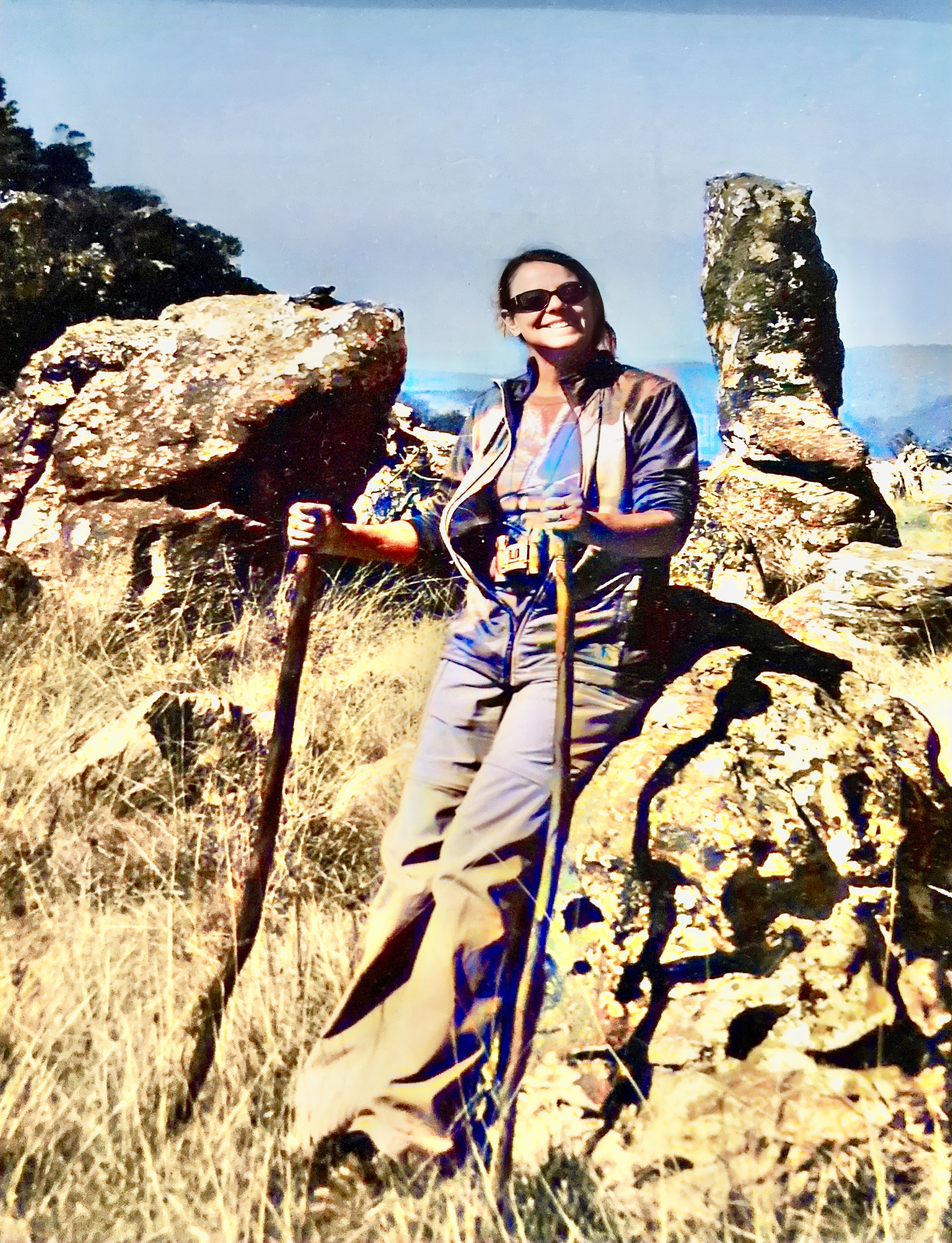
Daisy trots ahead in her jacket and vest — perfectly at home, born right here in the bush. But me? Rugged, hardy, Maine winter me? Every morning feels like being tossed into a walk in freezer large enough to hold the wild that surrounds us. I’m in two shirts, a fleece jacket, hat, mittens, scarf, and fleece lined boots.
And still the cold bites.
But then comes noon.
The transformation is almost theatrical. The sun climbs, the shadows shrink, and suddenly the world warms into the low 80s. The air smells different — sun baked earth, warm grass, the faint sweetness of a mystery flower, I can smell but cannot see. The beautiful flower scent is not enough to cover the scent of a farm under the sun. We see less animals. They have taken cover in the bush to rest quietly. They will reappear around 2pm with more energy than they had in the morning. More running, more leaping, and definitely more fighting for the tasting grass scattered among the trees and fresh water from the well.
Still no clouds. And that only prepares us for another cold morning. But for now the sun is out. And it doesn’t shine — it pierces. Five and a half hours after shivering in fleece, it feels like full blown summer.
Now, I am comfortable. But seeking shade at every chance. Daisy and I walk and stop to drink water have way through our journey. It's just pleasant.
Meanwhile, the South Africans are still “freezing.” Well… freezing from the waist up. Jackets, scarves, watch caps — paired with shorts and boots. A uniquely South African winter fashion statement.